



Financial accounting system & Internal audit
Financial accounting system
The Financial Management and Control Department of Trade and Development Bank is responsible for developing and refining the accounting policies to be followed by the Bank and monitoring their implementation; preparing investment plans and income and expense budgets and monitoring their execution; allocating costs across business units; preparing financial statements and providing management with relevant information; obtaining external audit assurance over the financial statements and disclosing them to the public; and providing accurate financial information that meets the decision-making needs of both internal and external users.
In carrying out its activities, the Department complies with the Accounting Law of Mongolia, the Banking Law, International Accounting Standards, International Financial Reporting Standards, the Corporate Income Tax Law and other tax legislation, the bank accounting package approved by joint order of the Governor of the Bank of Mongolia and the Minister of Finance, as well as other instructions and regulations on financial reporting issued by the Government of Mongolia, the Ministry of Finance, and the Bank of Mongolia. It also follows the Accounting Policy document and other rules, regulations, and procedures approved by the Chief Executive Officer of Trade and Development Bank.
By improving the Bank’s accounting and financial reporting processes and aligning reporting with international standards, the system enables departments, units, and employees at all levels to access quantitative information promptly, supports sound financial and economic decision-making, and contributes positively to revenue generation and cost efficiency.
In addition to operating with teams responsible for accounting, the general ledger, financial analysis, reporting, budgeting, and planning, the Financial Management and Control Department also provides overall management to the Financial Accounting and Control Department and Sales, Procurement Unit, and oversees the registration and control of the Bank’s contracts, the daily accounting transactions of branch settlement centers, and sequential and dual controls through both remote and on-site review.
Internal audit
Internal audit is an independent and objective assurance and consulting activity designed to add value to and improve an organization’s operations. It is an important component of corporate governance and helps the organization achieve its objectives by bringing a systematic and disciplined approach to evaluating and improving the effectiveness of governance, risk management, and control processes. Internal audit also supports better decision-making and enhances reputation and stakeholder confidence.
The Internal Audit function of Trade and Development Bank reports directly to the Audit Committee under the Board of Directors and is organized independently from Executive Management.
The governance and organizational structure of the Internal Audit system of Trade and Development Bank is shown below:
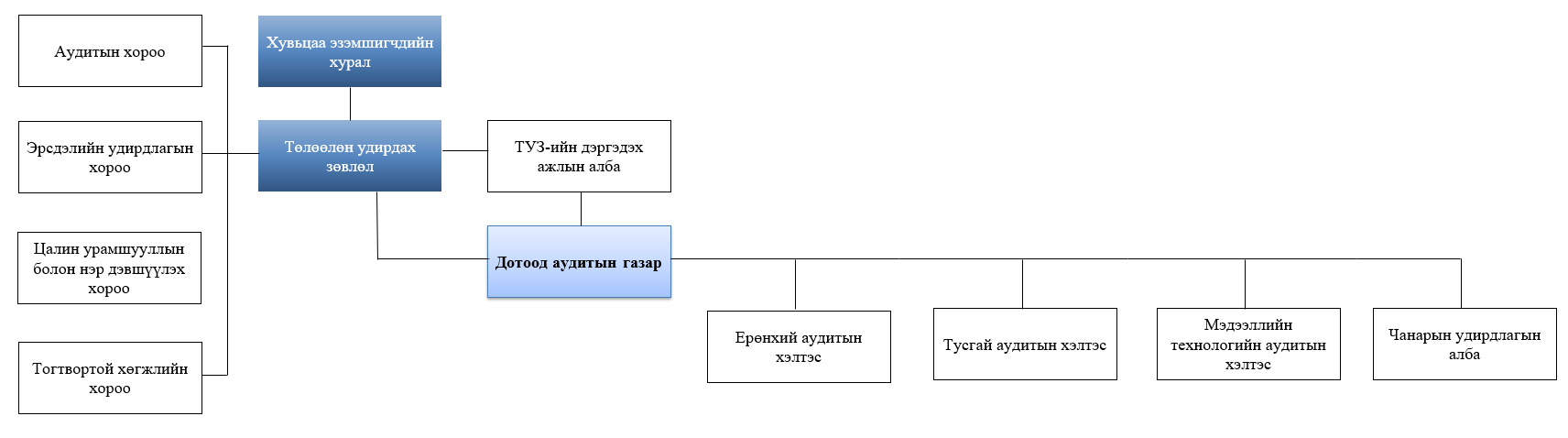
Internal Audit operates as an independent and objective assurance function aimed at improving the Bank’s operations and adding value, while also providing recommendations and advice. It reports to the Bank’s Board of Directors and Audit Committee and informs Executive Management in accordance with this principle. In addition, it uses the International Professional Practices Framework issued by the Institute of Internal Auditors (IIA), together with international good practices, as guidance and benchmarks for its activities.
Internal audit framework
Internal control activities are an integral part of the Bank’s day-to-day operations and constitute a system designed to mitigate risks at all levels of business and operations, with the aim of achieving effectiveness and efficiency, ensuring compliance with applicable laws and regulations, and providing reasonable assurance that objectives will be met.
Trade and Development Bank bases its internal control system, a core element of sound corporate governance, on applicable laws, rules, instructions, regulations, and standards.
At Trade and Development Bank, Executive Management is responsible for implementing the Bank’s internal control system, while the Audit Committee and Internal Audit oversee and assess its effectiveness and efficiency, provide conclusions, and promote improvements. In practice, all Bank units comply with the “Internal Control Matrix” approved by order of the Chief Executive Officer. In addition, internal control-related requirements are incorporated into internal procedures, appropriate control responsibilities are included in employees’ job descriptions, and necessary updates and improvements are made on an ongoing basis. The Bank also maintains designated control functions and a reporting system.
Activities relating to Executive Management’s internal control responsibilities are supported through an integrated risk and control policy, governance framework, and methodology by second-line functions, including the Financial Management and Control Department, the Financial Accounting and Control Unit, the Credit Risk Department, the Risk Management Policy and Regulatory Department, the Operational Risk Management Department, the Digital Risk Management unit, the Human Resources Department, the Compliance Unit, the Legal Department, and the Information Security Department. At the same time, directors and senior staff of all departments and units are responsible for the performance of internal controls over the products, services, transactions, and operations within their respective areas.
Executive Management of Trade and Development Bank regularly takes measures to optimize the Bank’s internal control system and continuously monitors to ensure that internal control activities are carried out consistently and with quality. In addition, Internal Audit evaluates whether the Bank’s internal control activities are operating normally and effectively, how Executive Management is improving internal controls, and whether corrective actions are being implemented without delay. It reports the results to the Board of Directors and the Audit Committee, informs Executive Management, and ensures that necessary measures are taken in a timely manner.